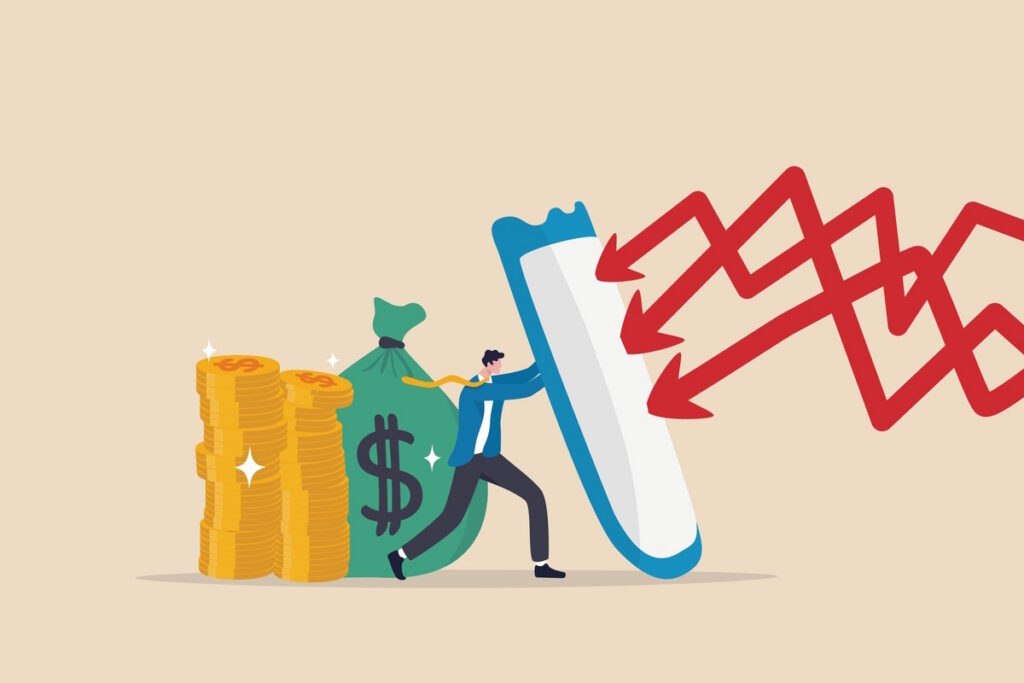
Have a long-term plan, maintain diversification, and stay the course!
Is There a Recession Coming?
Are we in a recession? That’s the question on everyone’s mind. First, let’s discuss what the definition of a recession is and how they have interacted with the markets in the past. Knowledge is our best weapon against allowing our emotions to dictate our actions or inaction. Knowing your options and how to navigate different periods will help you handle the uncertainty.
Recession Defined
The Corporate Finance Institute defines a recession as a term used to signify a slowdown in general economic activity. In macroeconomics, recessions are officially recognized after two consecutive quarters of negative Gross Domestic Product (GDP) growth rates.
In the U.S., a committee of experts at the National Bureau of Economic Research (NBER) formally declares a recession. So, what does the NBER look for to make the declaration? According to USA Today, NBER looks at factors such as changes in consumer income, spending, employment, and industrial production. Three main criteria are used when analyzing the above indicators:
- Depth, or the severity of the decline.
- Diffusion, or how widespread the decline is.
- Duration, or how long the decline has occurred.

The Business Cycle
The business cycle is the natural rise and fall of economic expansion and contraction over time. In other words, economic decline or recession is a natural part of the business cycle. The business cycle has four main phases: expansion, peak, contraction, and trough. In the expansionary phase of the business cycle, the economy experiences growth. Growth is expressed with generally low interest rates, and production increases. The business cycle’s peak is when growth hits a maximum, and prices and economic activity may stabilize for a short period before reversing downward. Contraction occurs when growth slows. This is when the recession occurs, as employment falls and demand decreases. Finally, the trough is when the economy hits a low point, with supply and demand hitting a low point. There is a wide variation in the length of the cycles, but historically, the business cycle lasts an average of five and a half years. So, if this occurs regularly and is a cycle, we should know what to do and how it affects our portfolios, right?
Historical Performance is Not an Indication of Future Performance
These words are written and uttered so often because it is true; the market reacts to numerous factors, and you cannot predict what will happen based on past experience. How long do recessions last? It depends. Let’s look at how the markets have been affected by recessions in the past.
Equities as an Example
The S&P 500 does not fully represent the stock market; it only includes 500 of the biggest publicly traded companies listed on the U.S. Stock exchanges. However, the S&P 500 has long been considered a good proxy for the equities market. But this is where it gets tricky; the S&P generally faces a steep decline before the recession is officially labeled and has bottomed out an average of four months before the recession ends. This means the worst is over for stocks before the rest of the economy sees its worst. Knowing that interest rates drop during a recession or contraction in the business cycle, bond prices tend to increase as interest rates and inflation decrease. However, many factors affect a bond’s price like creditworthiness and the duration of the investment. The only thing we know for sure is that prices will either go up, down, or stay the same.

Risk Vs Return
This uncertainty highlights the need for portfolio rebalancing and diversification in your financial planning. Economist Harry Markowitz earned the Nobel prize with his dissertation on “Portfolio Selection.” This paper transformed the landscape of portfolio management and formalized the investor trade-off—the relationship between risk and return. When selecting assets for a portfolio, we are balancing the most risk-averse investments, such as T-bills and their lower returns, with investments like stocks that can produce a high return but also carry a higher risk. Markowitz’s theory is what we are referring to when we talk about an investment portfolio.
Know Your Risk Tolerance
The best part about this risk/reward relationship is that it can be tailored to anyone’s risk tolerance, which is the degree of risk an investor is willing to endure, given the value of an investment. We lower risk by diversifying across types of investments, industries, locations, and companies of various sizes. Risk tolerance can also change as you go through life, as different events affect how you live and think. Identifying the level of risk you are comfortable with can be crucial when the market takes a turn. Once you have this, you can create an asset allocation to reflect the level of risk you are comfortable with. Meeting regularly with a financial advisor can help you review your risk tolerance and adjust it if needed.
When you meet with a financial advisor, you will create a plan together that has your wants and needs at the heart of it. During your initial meeting, your financial advisor determines your risk tolerance and investment objectives to achieve your goals. This initial interaction creates your target asset allocation. This diversified model will guide your plan throughout your investing time horizon.
Rebalance Your Investment Portfolio Regularly
When you meet with your financial advisor, portfolio rebalancing will be a regular part of your discussion. You will rebalance back to your target investment model. Rebalancing is the process of adjusting the weight of each of your asset classes to match your original or revised target asset allocation. How often you rebalance your portfolio depends on several factors, though most financial advisors recommend rebalancing your portfolio one to four times per year. Rebalancing on a set schedule lets you take advantage of market volatility. Rebalancing during market swings is fortified by your comfort level with your risk tolerance and knowing the amount of volatility you are comfortable with.
Once you create a long-term plan with a financial advisor, you can review your plan periodically to help ensure you are still comfortable and on the chosen path. Knowing that the business cycle will happen is a part of the plan. Reviewing factors like your time horizon may signal that you should reduce your risk if you are closer to retirement or were uncomfortable after the last market swing. A discussion with a professional often leads to a less emotional reaction. Seeing the market go down and wanting to get out is normal. Working with a financial professional to help you make decisions can help prevent you from making a knee-jerk reaction to what is happening in the markets.
Financial Plans for the Recession
Historically, investors who hold on to their investments through recessions see their portfolios completely recover. Recessions do not last forever; if a recession pushes your value down, selling those investments makes your losses permanent. Sometimes, however, knowing this is not always enough.
Establish an Emergency Fund
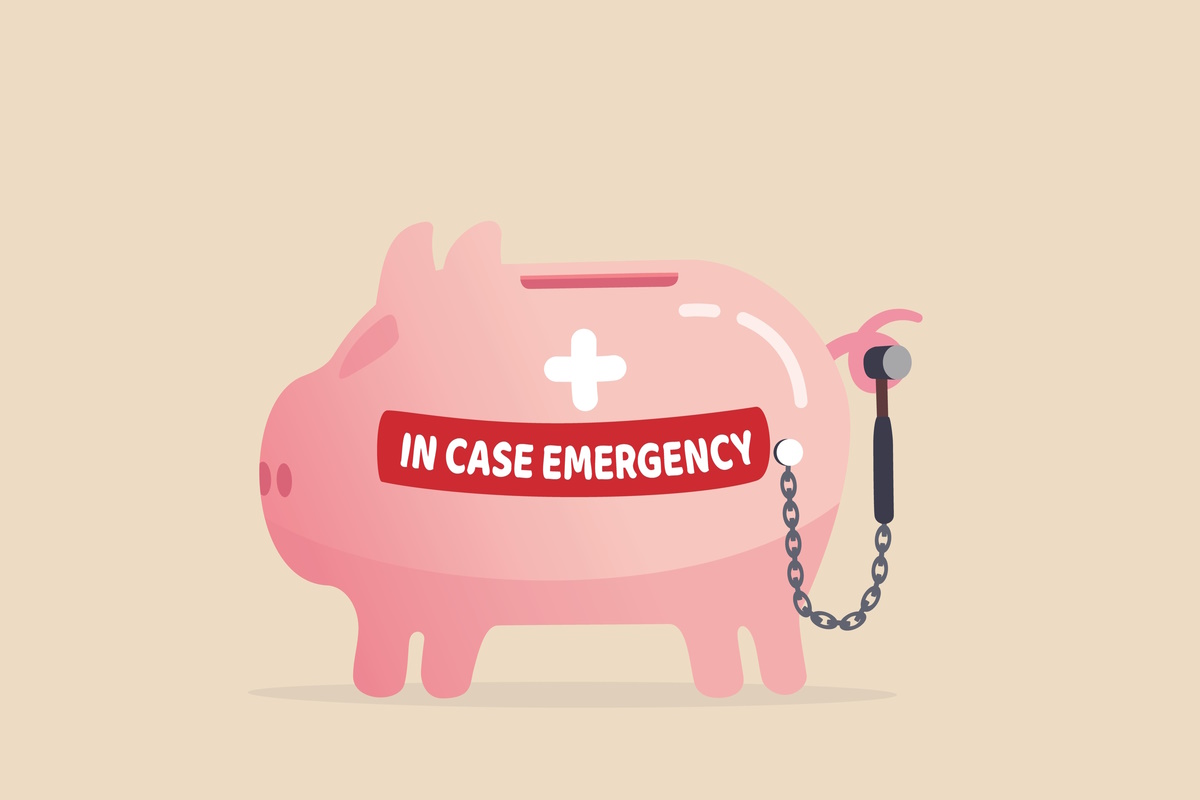
An emergency fund is one of the first things a financial advisor will tell you to establish, keeping some money in a safe and liquid account that is easily accessible to help cover unexpected expenses. Most financial advisors recommend keeping 3-6 months of expenses in this fund. The length of time can change depending on your specific situation. Factors include whether your job may be in jeopardy or if you are the sole income producer for your family. An emergency fund can help protect you against having to sell some of your portfolio when the market is going through a major change.
Leverage Sell High, Buy Low
Investing during a recession can seem daunting. However, for long-term investors, a market downturn can simply mean that stocks are on sale. Everyone likes when things are on sale, right? If the bond side of your portfolio is up and the equity side is down, we should move some of the bond side profit to the equity side because the equity side is on sale. This is a sell high, buy low philosophy. The same concept applies if you contribute to your retirement accounts; this is a buying opportunity for you, so you wouldn’t stop contributing.
There is No Crystal Ball
Most importantly, do not try to time the market. Sure, getting out of the market when it is high seems easy enough, but how do you know when it is at a high? The S&P 500 had 68 record highs in the year 2021. If you had sold after the first one, you would have missed the next 67. If you wait for an increase, are you missing some of the recovery? Because if you have been through this before, the volatility can look like whatever you want. You are basically guessing.
Sources:
- CFI TEAM; 12/05/22, Recession, Corporate Finance Institute, Recession – Definition, Indicators, Causes and Effects (corporatefinanceinstitute.com)
- Hicks, Coryanne; Steinberg, Stephanie; Powell, Farran; 04/05/2023, What is a recession, USA Today, What is a recession? What to expect and how to prepare – USA TODAY Blueprint
- Investopedia Team; 4/3/23, Economic Cycle: Definition and 4 stages of the business cycle, Investopedia, Economic Cycle: Definition and 4 Stages of the Business Cycle (investopedia.com)
- Klebnikov, Sergei; 06/02/22, How does the market perform during an economic recession? You may be surprised, Forbes, How Does The Market Perform During An Economic Recession? You May Be Surprised (forbes.com)
- Fitzgerald, Andrew, 10/16/21, How to rebalance a portfolio, CreditDonkey, 5 Steps to Rebalance Your Portfolio + How Often to Do It (creditdonkey.com)
- Turner Matt, 12/21/2023 With 68 record highs, 2021 was a year of superlatives on the S&P 500, With 68 record highs, 2021 was a wild year on the S&P 500 – Los Angeles Times (latimes.com)